
Realistic Hair Type 4C coily hair
The tightest common zigzag — least dry definition, most shrinkage on community charts.
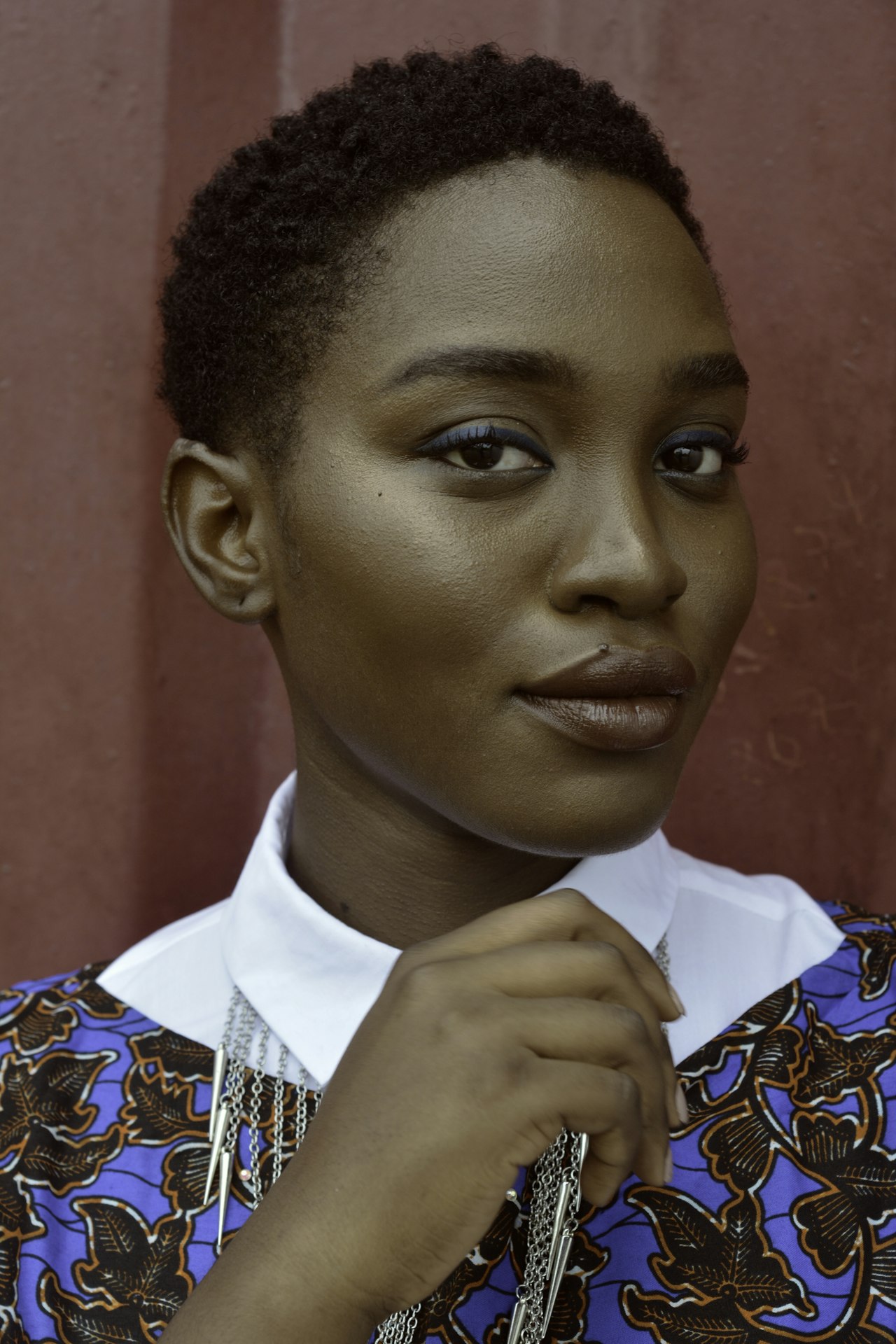
Type 4C is the tightest letter on the coily charts people search: a densely packed zigzag with the least obvious loop until you stretch a single fibre. From a distance, dry 4C often looks like a soft, full mass rather than a field of visible coils. Community charts frequently cite shrinkage of 75 percent or more for this subtype — figures that vary by chart and head, but the practical lesson is stable: dry length is a terrible growth meter. Each extra bend is a friction site. Care that protects the strand beats care that chases someone else’s wash-and-go photo.
Walker’s book did not ship a frozen 4C
Andre Walker’s Andre Talks Hair! (Simon & Schuster, 1997) established Type 4 as the tightest family in the popular numbered system. The detailed 4C label that dominates search results was filled in and spread by later community charts (including NaturallyCurly-era infographics), the same post-1997 expansion that popularised 3C. This wiki documents that fill-in on typing systems and still uses 4C because that is what people type. The letter is styling shorthand, not a laboratory species.
Shape only — never ancestry
Koch, Tridico, Bernard, Shriver, and Jablonski (2020, American Journal of Human Biology) review how cosmetic, forensic, and anthropological languages talk past each other about the same fibre. Callender, Burgess, Harvey, and colleagues (2026, Journal of Cosmetic Dermatology) review mainstream typing systems for clinicians and ask that hair be typed by shape, not race. This encyclopedia follows that rule on every coily page. 4C describes a zigzag geometry and a care load. It does not encode ethnicity, worth, or “good hair” myths. De La Mettrie et al. (2007) would place many 4C heads on a continuous curvature scale rather than in a moral bin.
Reading 4C on an air-dry
Cleanse, skip styler, air-dry, check more than one zone. Stretch one strand: you may see a tight zigzag with little open coil. If small S- or O-coils are obvious without much stretch, compare Type 4A. If angular Z-bends are clear and the silhouette is fluffy but still shows repeat when pulled, compare Type 4B. Family overview: coily hair. Side-by-side: 4A / 4B / 4C. Table language: hair type chart. Method: identify your hair type.
If dry hair still shows pencil corkscrews in the mirror without stretching, start on Type 3C / curly before assuming 4C.
Shrinkage, length, and breakage
A 4C style that looks two inches dry can be eight inches or more stretched. That is not failed anagen — scalp growth timing still lives on growth cycle. Breakage from tension and dry combing is what erases length at the edges. Protective styles help when they reduce daily manipulation; they harm when they pull. Pain is a stop sign. Measurement without daily heat: hair shrinkage.
Detangle only with serious slip, ends toward roots, on wet or very damp hair, in small sections. Dry brushing 4C is how you get a bag of pieces and a myth that “4C will not grow.”
Moisture and sealing
More surface area per centimetre of visible length plus a zigzag path means water and sebum struggle to reach the ends. Leave-in while wet, cream for body and slip, then a sealing oil or butter when porosity allows. LOC versus LCO order is a porosity debate — full notes on LOC / LCO method. Low-porosity 4C needs warmth and lighter entry points; high-porosity 4C drinks and dumps water and may want film plus occasional protein. Cuticle pages: porosity, porosity test, protein versus moisture.
Least dry definition does not mean “skip styler.” It means definition success looks like softness, reduced halo, and intact ends — not a Type 3 ringlet video.
Care map for Type 4C
- Cleanse the scalp as itch and buildup demand; residue can masquerade as dryness.
- Condition with maximum slip; detangle patiently in sections.
- Leave-in on wet hair; cream; seal if the cuticle accepts it.
- Protective styles for stretch and fewer daily touch events; take them down before the scalp complains.
- Satin or silk at night. Finger-detangle whenever tools snag.
- Full family order: care by type.
Context links
Hub map: types. Neighbours: 4A, 4B. Science: structure. History of letters: typing systems.
Type 4C is the tightest common zigzag on community Walker-style charts: high shrinkage, high friction, moisture-first sealing, and a label that arrived after Walker’s first book. Geometry and care — never an ancestry claim.
Frequently Asked Questions
Quick answers to the most common questions.
Did Walker’s 1997 book include 4C?
Walker published Type 4 as the tightest family. The popular 4C subtype label was filled in and spread by later community charts. See typing systems.
Does 4C hair grow slowly?
Anagen growth is still on the order of about a centimetre a month with individual variation. Shrinkage hides length; breakage removes it. Read hair shrinkage and growth cycle.
Is 4C the same as damaged hair?
No. 4C is a tight zigzag pattern. Damage is porosity, splits, and breakage on any type. Seal moisture and reduce friction before rewriting your letter.
Does Type 4C imply a specific ethnicity?
No. This wiki types by shape only, following Callender et al. (2026) and Koch et al. (2020). 4C is geometry and care load, not ancestry.