
Realistic Hair Type 3A curly hair
Loose chalk-width spirals — the softest spring in the Type 3 family.
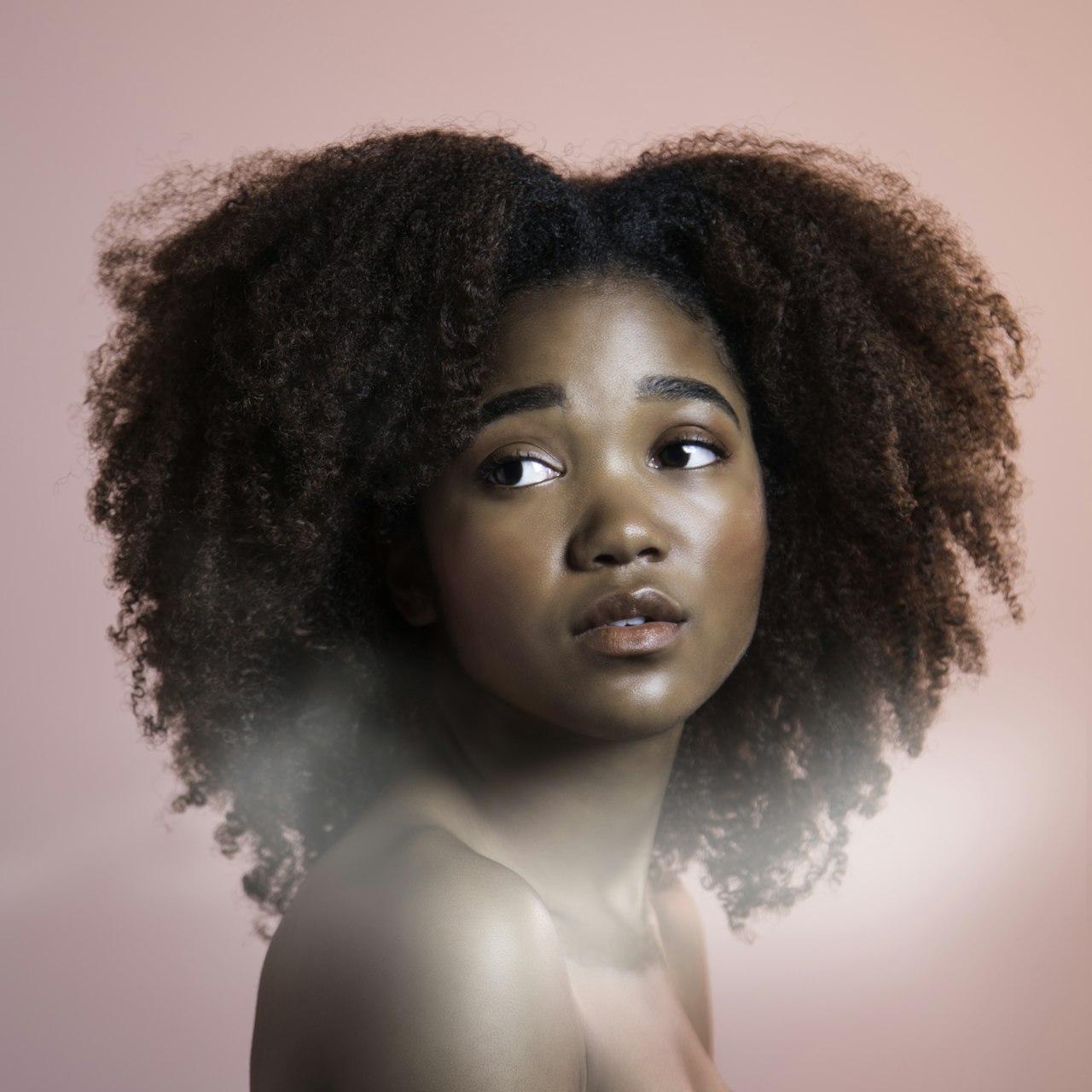
Type 3A is the loosest letter inside Walker’s curly family. On a clean, product-free air-dry, the strand forms a spiral you can wrap around the width of sidewalk chalk — the same diameter language used on Mayvenn- and Curl Centric-style charts and on this wiki’s hair type chart. The helix is wide, shine is often still visible, and the root can look almost wavy until mid-length. That softness is why 3A is the subtype people argue about with 2C and why heavy butters flatten it into a greasy ribbon.
Andre Walker published Type 3 as curly hair in Andre Talks Hair! (Simon & Schuster, 1997). Letter grades inside the family are a tightness scale for product talk, not a laboratory assay of curvature. De La Mettrie et al. (2007, Human Biology) would scatter 3A along a continuous shape axis next to deep waves. Use the letter to shop and describe a wash day. Use identify your hair type when the letter is still a guess.
What chalk-width actually means
The wrap test is a comparison, not a calliper. Take one air-dried curl, wrap it around a piece of chalk or a thick marker, and see whether a stable loop holds. 3A loops are large and soft. Stretch the same strand wet and release: you should feel spring, not a flat S that drops back into a ribbon. If the dry pattern is still an S with a hook at the ends, stay on wavy hair and read the border guide. If the loop is tighter — closer to a marker or pencil — move toward Type 3B or the family overview on curly hair.
Mixed heads are ordinary. Crown 3A with nape 2C, or 3A lengths with 3B denser patches, does not mean you failed the chart. Prefer the tighter pattern for product weight, then still read both neighbouring pages.
Product weight: light to medium
3A collapses under the butters sold to denser coils. A leave-in or light cream plus a soft gel is the usual stack. Mousse can work on fine 3A density. Oils layered on oils glue the helix flat. If your wash-and-go looks defined wet and limp dry, you almost certainly overshot weight, not “lost your curl gene.”
Humidity undefines 3A first because the helix is wide and the clump has more surface exposed to moist air. A gel cast — the crunchy film you scrunch out when fully dry — is a physical barrier, not a personality test. Cream alone often leaves a halo on 3A even when the same cream looks perfect on 3C.
Versus 2C and versus 3B
Versus 2C. 2C is still a wave family: a deep S that may ringlet at the perimeter. 3A is a spiral that springs into a loop. Wet hair lies at this border; water weights every family looser. Judge dry. The dedicated fight is 2C versus 3A.
Versus 3B. 3B ringlets sit closer to marker width, often with higher density and more shrinkage. 3A photographs “beachier”; 3B photographs “ringlet.” If your dry clumps look like textbook corkscrews rather than soft chalk loops, open Type 3B.
Porosity is a second axis
A fine low-porosity 3A rejects protein masques and heavy cream. A bleached high-porosity 3A drinks water, frizzes by afternoon, and may want a stronger film plus occasional protein. The Walker letter does not measure cuticle gaps. Run behavioural checks on the porosity page and the porosity test before you copy a celebrity 3A routine that assumes one cuticle.
Strand thickness and density still sit outside the letter. Fine high-density 3A and coarse low-density 3A share a spiral diameter and not a product pump count. See density versus thickness when the aisle fails you.
Care map for Type 3A
- Cleanse the scalp; condition the lengths with enough slip to detangle gently in the shower.
- Apply leave-in and styler on soaking or very damp hair so clumps form as a unit.
- Keep stylers light-to-medium; add gel if humidity destroys the cast.
- Air-dry without touching, or diffuse on low. High heat plus tension trains 3A toward looking like 2A.
- Refresh with water mist plus a dab of leftover styler; dry cream on dry curls just sits.
- Ordered routines by family: care by type. Film-and-clump habits that many call the curly girl method live on curly girl method when you want the longer wash-day script.
Science under the soft spiral
Curl correlates with follicle ellipticity and bilateral cortex structure (Robbins). Type 3A is a marketing bin over that biology. Koch et al. (2020, American Journal of Human Biology) warn against turning salon bins into ancestry stories. Callender et al. (2026, Journal of Cosmetic Dermatology) ask clinicians to type hair by shape, not race. This page describes geometry and product weight only.
Jump to the types hub for the four-family map, or stay inside Type 3 on curly hair when you need the whole 3A–3C spread in one article.
Frequently Asked Questions
Quick answers to the most common questions.
How do I know I have Type 3A and not 2C?
On a clean air-dry, 3A forms a springy spiral you can wrap into a chalk-width loop. 2C remains a deep S even when ends hook. Stretch and release: ribbon versus spring is the practical check. See 2C versus 3A.
Why does heavy cream flatten my 3A curls?
The helix is wide and often fine. Extra mass pulls the spiral into a ribbon. Drop to light cream or mousse plus a soft gel, then rebuild weight only if clumps still fail.
Can Type 3A be high porosity?
Yes. Colour, bleach, and heat raise porosity on any letter. Test cuticle behaviour separately on the porosity test instead of shopping by 3A alone.
Is 3A the same as loose curly hair?
In everyday speech, yes — 3A is the loosest Walker curly subtype. It is still Type 3 (spiral), not Type 2 (wave). Mixed 2C/3A heads should read both family pages.