
Realistic Hair Protein and moisture on a real wash day
What hydrolyzed protein actually does, when water is the missing piece, and how hygral fatigue shows up in the shower.
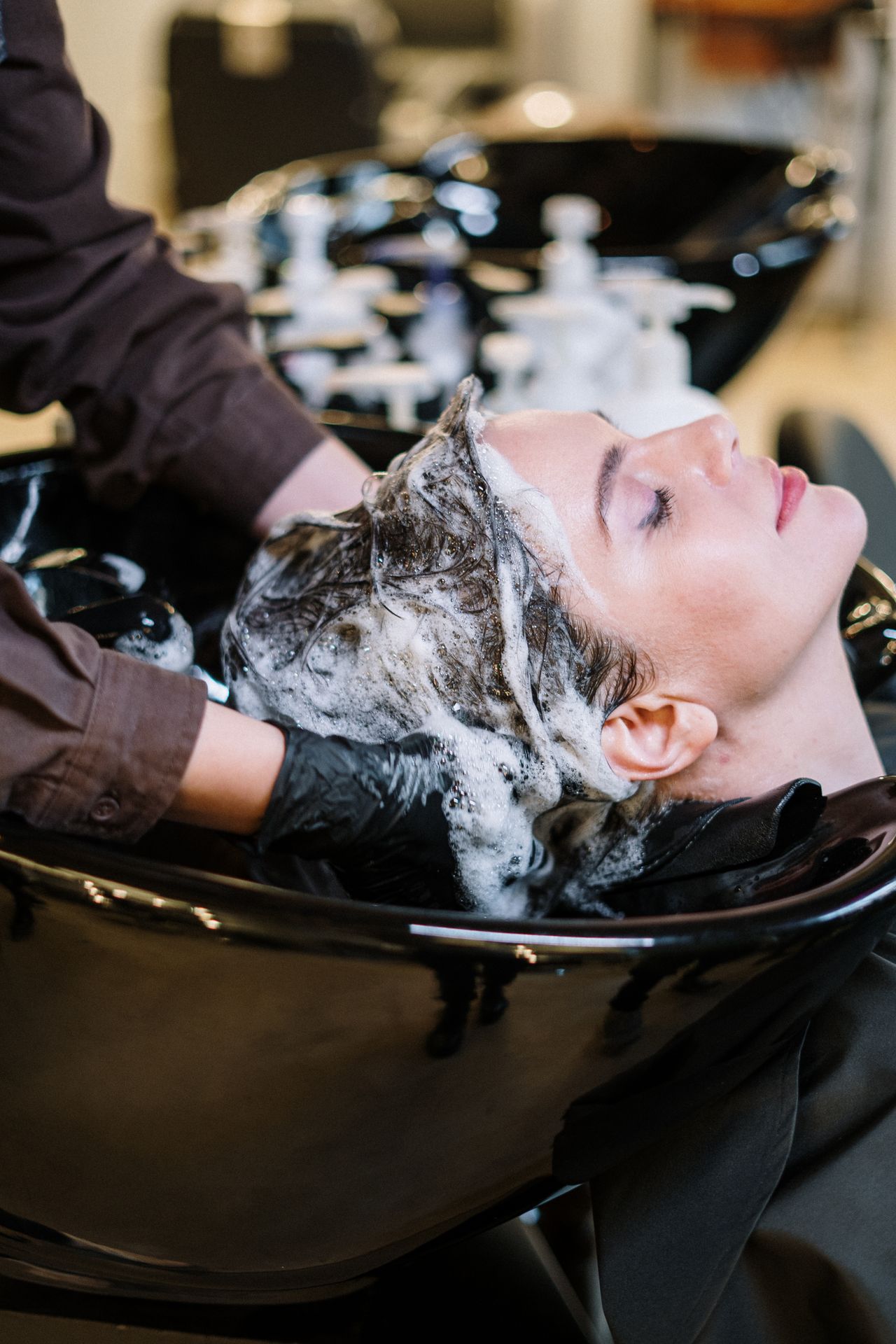
Salon aisles sell a seesaw: too much protein, too much moisture, “balance” as a personality. The fibre does not keep a ledger that way. Protein treatments are mostly hydrolyzed keratin, wheat, silk, or collagen fragments that sit on or in a damaged cuticle and temporarily stiffen the cortex. Moisture in this vocabulary is water, plus humectants that hold water, plus oils that slow water leaving. They are different jobs. This guide is the wash-day method. The cuticle physics sit on porosity and structure. Product order by family sits on care by type.
What a protein treatment is allowed to claim
A hydrolyzed protein is a short chain. It cannot rebuild a follicle. It can fill gaps in a raised cuticle, add a little tensile strength, and make mushy high-porosity hair feel less like wet paper. Chemists still start from Robbins’ fibre text: disulfide bonds and cortex keratin set the shaft; a rinse-out mask is a patch, not a weld. If hair is virgin, low porosity, and already springy, extra protein often sits on the surface and makes it straw-stiff. That is overload as a feel, not as a blood test.
Cosmetic copy loves “reconstruct.” Translate that as “temporary film plus a bit of penetration on a compromised cuticle.” Bond-building products that talk disulfide chemistry are a different class; they are still not permission to bleach next week.
What moisture is allowed to claim
Water swells the fibre. Humectants (glycerin, some sugars, panthenol) hold some of that water. Oils and butters slow evaporation; they are seals, not drinks. On high-porosity coils, a water-based leave-in then a seal is rational. On low-porosity 2A, stacked butter blocks the water you were trying to add. The porosity test is how you pick the stack. The porosity checker is the short version.
Hygral fatigue is a cycle, not a vibe
Hygral fatigue is repeated swell-and-shrink: wet, dry, wet, dry, until the cuticle chips and the cortex weakens. It is why “just add more water” is not a care plan for already-fragile bleached 3A. It is also why Type 4 that is wet for hours every wash day can feel stretchy even when the routine looks moisturising on paper. Reduce the amplitude: fewer marathon soaks, gentler detangling while wet, less high heat after a full saturation. The growth cycle still governs how much new fibre you get; hygral fatigue governs how the existing shaft fails.
A bathroom elasticity check
Take one wet shed strand (or a tiny section you can spare). Stretch gently.
- Snaps at once: cortex protein is often depleted, or the fibre is weathered. A protein treatment on a schedule can be reasonable. Stop yanking.
- Stretches far and stays stretched: water-heavy relative to the cortex; protein or a stronger styler may help the next wash, and stacked oils are not the fix.
- Stretches a little and springs back: leave it alone. That is the ordinary wet-hair range, not a diagnosis.
This is folk method, not a tensile machine. If hair is breaking in sheets, pain, or patches, leave the wiki for a clinician.
How type and porosity change the dose
- Fine straight and loose wavy hair show protein stiffness fast. Use protein rarely, if at all, unless bleach has opened the cuticle.
- Curly high-porosity hair is the classic protein customer: mushy clumps, endless dry time, then a mask that restores spring for a week.
- Coily hair is often called “protein hungry” in marketing. Some 4C heads want it; low-porosity 4C often wants water and slip, not another keratin rinse. Family is not a prescription.
The 2C/3A border fight on 2C versus 3A is about loop geometry. Protein versus moisture is about the cuticle you already have on that loop.
A simple rotation, not a religion
- Wash and judge feel, not the label on last month’s mask.
- If hair is mushy-stretchy and high porosity, use a protein treatment that week, then return to moisture-and-seal.
- If hair is stiff, dull, and snaps dry, skip protein for several washes; add water and a lighter seal.
- If nothing is wrong, do not “balance” it. Idle fibre is not a problem to solve.
Clarify when film from protein or butter is faking dryness. Then re-run the air-dry identification on identify your hair type only if the pattern itself changed. A stiff week is not a new Walker letter.
What this page will not do
It will not rank brands, invent a milligram dose, or treat “protein sensitivity” as an allergy chart. Some people dislike the feel of a particular hydrolysate. That is preference plus porosity, not a blood type. Density and thickness change how much product you mix; they do not change the chemistry — see density versus thickness.
Papers and textbooks we lean on for cuticle behaviour are listed on research notes and sources. Lab Muffin’s chemist video embedded here is a public explainer of the same distinction, not a substitute for Robbins. After you know whether this week’s shaft wants stiffness or water, go back to care by type and run the family order. The seesaw is a shop-window. The fibre is a wet keratin rope with a cuticle. Treat it like one.
Frequently Asked Questions
Quick answers to the most common questions.
Is protein the opposite of moisture?
No. Protein treatments patch and stiffen a damaged cuticle. Moisture here means water, humectants, and seals. You can need both in the same month and neither in the same wash.
What is hygral fatigue?
Repeated swelling and drying that chips cuticle and weakens cortex. Fewer marathon soaks and gentler wet detangling reduce it. It is not a Walker letter.
How do I know I have protein overload?
Hair feels straw-stiff, dull, and snaps dry after protein products. Skip protein for several washes and add water plus a light seal. Confirm porosity on the porosity test.
Do Type 4 coils always need protein?
No. Some high-porosity coils like a scheduled treatment. Low-porosity 4C often wants slip and water. Family is geometry, not a keratin prescription. See coily hair.