
Realistic Hair 2C waves versus 3A spirals
The internet’s favourite border fight, judged on a clean air-dry instead of a wet clump.
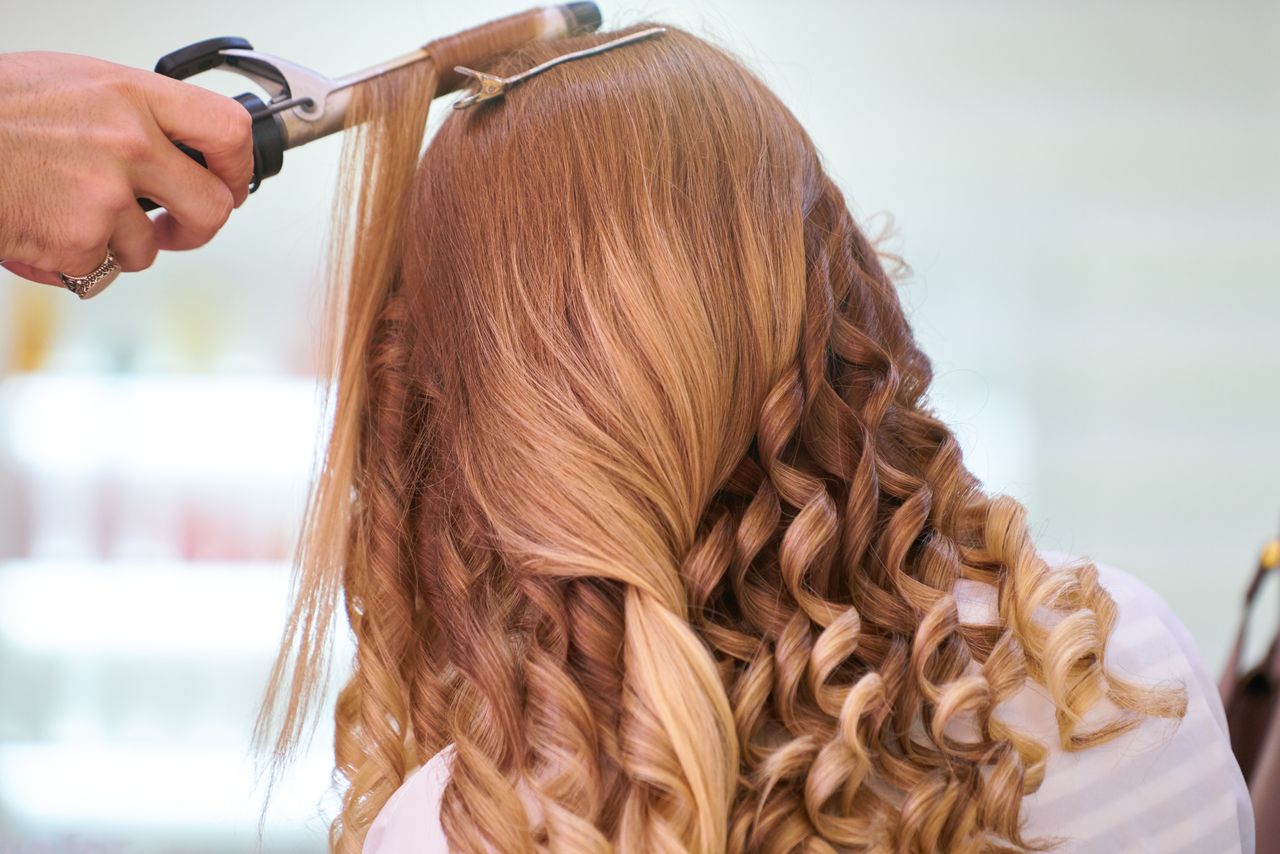
2C versus 3A is the most searched hair-type argument on the internet, and it is usually argued on wet hair. That is the wrong specimen. Andre Walker’s chart describes the pattern that appears when hair is clean, product-free, and fully dry without heat. 2C is still a wave family: a deep S that may hook at the ends. 3A is the first spiral family: a loose loop that springs, often chalk-width on a wrap test. The number changes the product weight. The letter is a tightness grade inside the family. This page is the border exam. The method that assigns any letter is identify your hair type. The table is the hair type chart.
What 2C is allowed to look like
On the wavy page, Type 2 makes an S when stretched and a ribbon when it is not. 2A is a loose bend. 2B is a clear S. 2C is the deep S that wants to spiral at the bottom third and still lies in a wave when you pull a section straight and let it drop. Frizz at the halo is common. Clumps are optional. A 2C head in gel can look like loose 3A for an afternoon. Take the gel out, air-dry, and the S usually returns. That is still Type 2.
What 3A is allowed to look like
On the curly page, Type 3 springs into a loop. 3A is the large spiral — wrap-test chalk or a thick marker, not a pencil. Shrinkage is real but moderate; a 3A strand that looks shoulder-length wet may sit a bit above the shoulder dry. The clump is a spiral, not an S that hooked once. If you stretch a dry 3A curl and release, it should coil, not fall into a zigzag S.
Why wet hair lies
Water weights the fibre and temporarily opens the pattern. Every family looks looser wet. 2C wet can show round clumps that vanish when dry. 3A wet can look like 2C until the spiral sets. Judge dry. Type 4 educators have said this for years about coils; the same physics applies at the 2/3 border. Humidity can fake a tighter letter for a day. One humid Tuesday is not a type change.
Mixed heads are the default
Crown 3A, nape 2C is ordinary. Walker-style wrap-test videos and later chart explainers agree: if you must pick one letter for product weight, prefer the tightest pattern that is still clearly there after an air-dry. Then still read both wavy and curly. De La Mettrie et al. (2007, Human Biology) measured shape as a continuum; 2C and 3A are neighbouring bins on that continuum, not species. Koch et al. (2020) warn against turning bins into ancestry. This border is geometry.
A five-check border test
- Cleanse, skip styler, air-dry, do not touch. Same rules as the identification guide.
- Look at mid-lengths and ends in daylight, not only the crown in a bathroom mirror.
- Stretch one dry section and release. S that drops back into an S → stay in 2. Spiral that springs → 3A is in play.
- Wrap one dry curl around chalk. No stable loop → you are still in waves. Chalk-width loop that holds → 3A.
- Check shrinkage. Dramatic dry/wet length change leans curl; modest change leans wave. Neither check is a lab.
If three checks say wave and two say curl, you are mixed. Write “2C/3A” in your notes and care for the tighter pattern’s weight. The care by type page already says porosity wins on product weight when family and porosity fight; here, the tighter geometry wins on gel versus cream when the head is mixed.
What the border cannot tell you
Porosity, density, and thickness. A fine high-porosity 2C and a coarse low-porosity 3A do not want the same protein schedule — see protein versus moisture and density versus thickness. The porosity test is a different appointment.
The border also cannot tell you worth, ancestry, or whether your 1997 hardcover is “valid.” Walker published families so product talk could be shorter. Later charts filled 3C and 4C. L’Oréal’s I–VIII morphometry and LOIS sit on other typing systems. Use Walker here because that is the fight people type into a search box.
After you pick a side (or both)
Open the family page. Run care. If the letter still feels wrong a week later, repeat the air-dry — do not add three new gels and re-quiz. Hormones, length, and chemical history can shift how a border pattern shows; the follicle’s programme is slower than a carousel of infographics.
History of the letters, including why twelve boxes were never ISO: typing systems. Papers that refuse the boxes: research notes. If you came here from a video that assigns type on soaking hair, watch it as entertainment, then dry your head and use the five checks. The spiral either holds or it does not. That is the whole border.
Frequently Asked Questions
Quick answers to the most common questions.
Can gel turn 2C into 3A?
Gel can clump a deep wave into a temporary spiral. Judge type on a clean air-dry without styler. The S that returns is still Type 2.
What if my crown is 3A and my nape is 2C?
Should I identify on wet hair?
Use wet hair only as a hint. Water loosens every family. The Walker chart is the dry, untreated pattern.
Is 2C versus 3A scientific?
They are neighbouring salon bins on a shape continuum (De La Mettrie et al., 2007). Useful for product weight. Not species. See typing systems.