
Realistic Hair Type 4B coily hair
Angular Z-bends — less obvious coil from a distance, clear zigzag when you stretch.
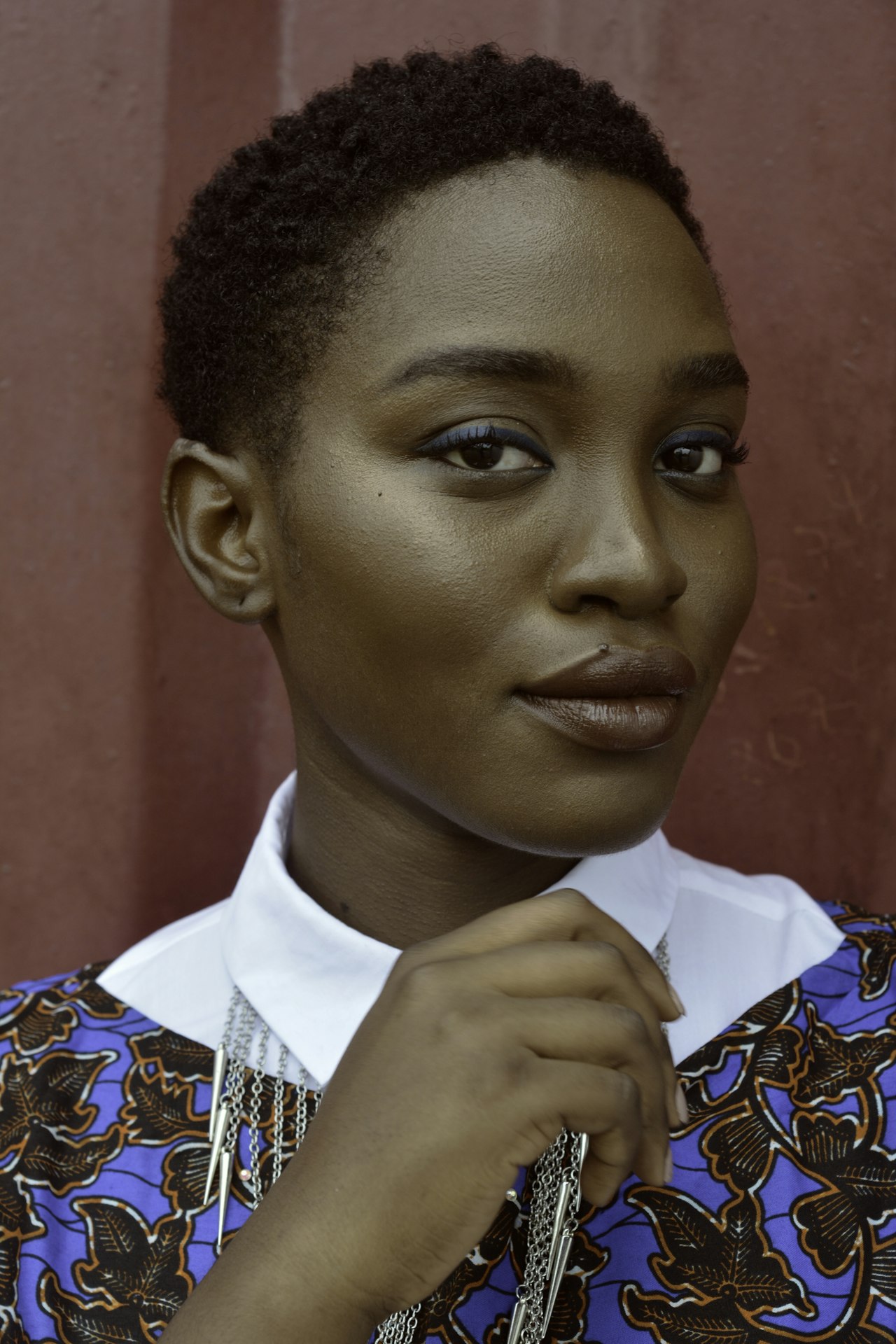
Type 4B sits in the middle of the coily family on popular Walker-style charts: the strand bends at sharper angles than a round 4A spring. From a distance the dry pattern can look fluffy rather than coiled. Stretch a single fibre and the Z appears — a zigzag repeat instead of a soft S- or O-coil. That is why phone photos mislabel 4B as 4C and why wash-and-go “definition” tutorials filmed on 4A disappoint on 4B heads.
Walker’s 1997 book (Andre Talks Hair!) used shorter Type 4 language than today’s A/B/C grid. Community charts expanded the letters. This wiki keeps coily as the family word and 4B as the search label. The chart is styling shorthand. Scientific papers (De La Mettrie et al., 2007; Koch et al., 2020) prefer continua of curvature. Callender et al. (2026) insist on shape-based typing — never race-as-texture. This page describes geometry and care load only.
Fluff versus definition
Definition on 4B often means soft clumps and reduced halo, not Instagram corkscrews. Shiny spiral photos are easier on Type 4A and Type 3. Chasing 4A photos with heavier gel can leave 4B crunchy and still fluffy once you scrunch. Judging success by someone else’s coil diameter is how people over-manipulate.
On a clean air-dry, look for angular repeats when you stretch a strand. If you already see small round coils without stretching, compare 4A. If even a stretched strand shows a densely packed zigzag with almost no open bend, compare Type 4C. Family page: coily hair. Three-way compare: 4A / 4B / 4C. Wrap-test table: hair type chart.
Mixed 4A/4B and 4B/4C zones on one head are normal. Prefer the tighter pattern for sealing and detangling patience.
Shrinkage and fragile bends
More angles per centimetre means more places a comb can snag. Shrinkage is high — community charts often sit Type 4 between roughly 50 and 75 percent depending on letter and chart. Dry length under-reports growth. Details: hair shrinkage. Growth timing: growth cycle.
Detangle only with slip, ends toward roots, on wet or very damp hair. Dry combing Type 4B is a reliable way to collect broken pieces and then blame the chart letter for “undefined” hair.
Moisture sealing on a Z-pattern
Sebum and water travel poorly along sharp bends. Ends dry while the scalp may still be fine. Water-based leave-in first, then cream, then a sealing oil or butter if porosity allows — the LOC/LCO conversation is really a porosity conversation. Full method: LOC / LCO. Cuticle behaviour: porosity and porosity test.
Low-porosity 4B rejects heavy butter until warmth and time help. High-porosity 4B (chemical history, heat) drinks water and frizzes as it evaporates — that strand wants film and sometimes protein, not endless misting. Protein seesaw: protein versus moisture.
Care map for Type 4B
- Cleanse the scalp when buildup or itch demands; co-washing alone can leave residue that feels like dryness.
- Condition with serious slip; work in sections.
- Leave-in on wet hair; cream; seal if your cuticle likes it.
- Choose styles for reduced daily manipulation — twists, braids, or other protective styles that do not pull the follicle.
- Satin or silk at night to cut friction and single-strand knots.
- Ordered routines: care by type. Fresh identification: identify your hair type.
Borders worth re-checking
Versus 4A. Rounder, more obvious coil when isolated → 4A. Angular Z and fluffier silhouette → 4B. Versus 4C. 4B still shows some angular repeat when stretched; 4C may look like a densely packed zigzag with the least open pattern until you pull hard. Read Type 4C. Versus 3C. Visible pencil corkscrew in the dry mirror without stretch → stay on Type 3C / curly first.
Language and limits
Nothing about 4B is “less healthy” by default. Breakage is usually mechanical stress plus dryness. Walker’s original wording for Type 4 included terms many readers now reject; this encyclopedia uses coily and letter labels for search clarity. History: typing systems. Hub: types. Follicle geometry: structure.
Type 4B is a Z-pattern coily subtype: less visible coil from across the room, real shrinkage, and care that prioritises slip, sealing, and low manipulation.
Frequently Asked Questions
Quick answers to the most common questions.
Why does my 4B look fluffy instead of coiled?
The Z-bend is less round than a 4A spring, so dry hair can read as soft volume rather than distinct coils. Stretch a strand to see the zigzag. Definition goals should match 4B geometry, not 4A photos.
How do I tell 4B from 4C?
Stretched 4B still shows angular repeats. 4C is tighter, with the least obvious open pattern until you pull a fibre. Compare both pages and 4A–4C.
Should Type 4B avoid wash-and-gos?
Not necessarily — but success looks like reduced frizz and soft clumps, not Type 3 corkscrews. Many 4B heads prefer protective styles between wash days for less manipulation.
Is 4B damaged hair?
No. 4B is a pattern. Damage is porosity, split ends, and breakage, which can happen on any type. Seal moisture and reduce friction before assuming the letter is the problem.